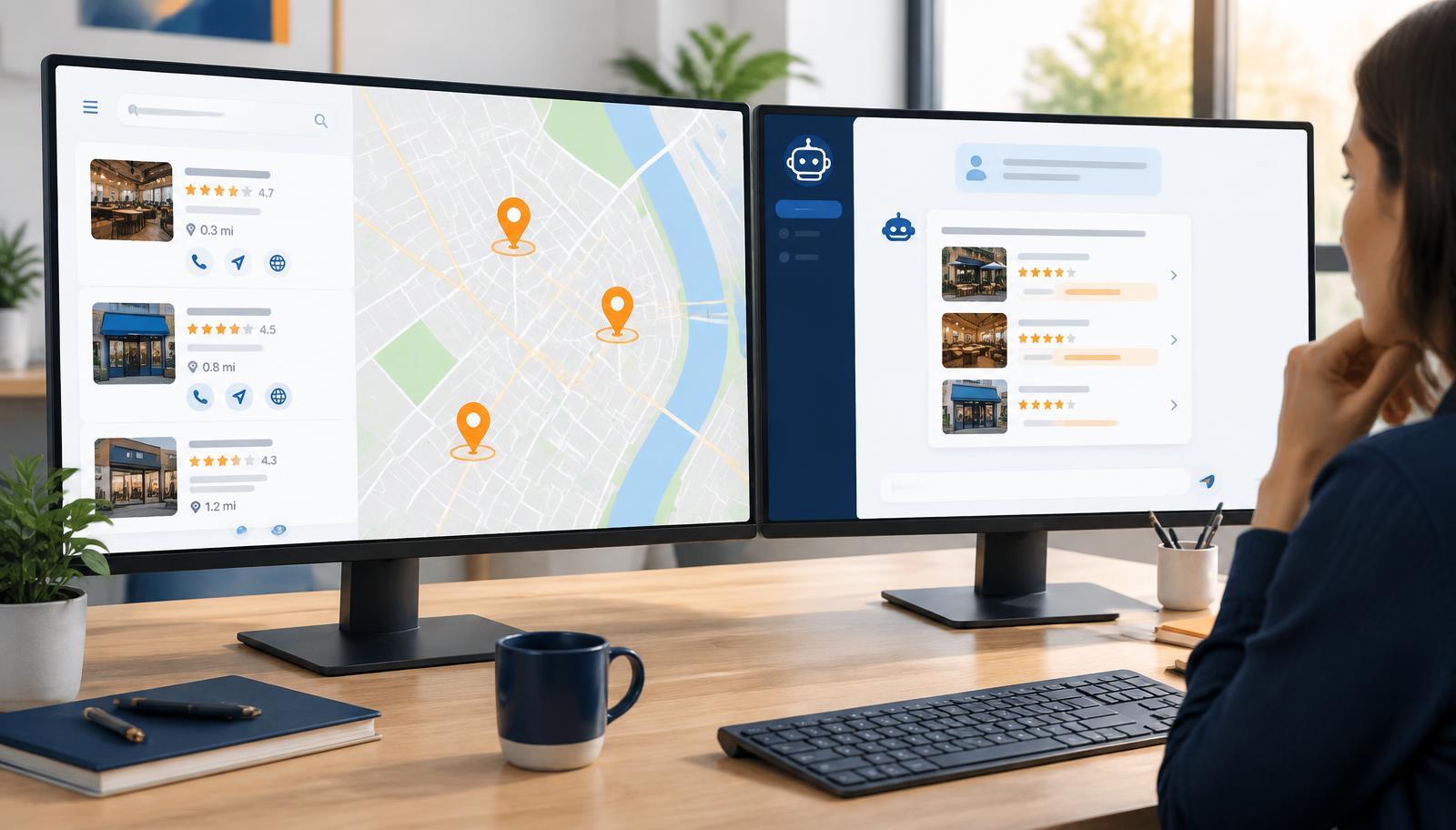
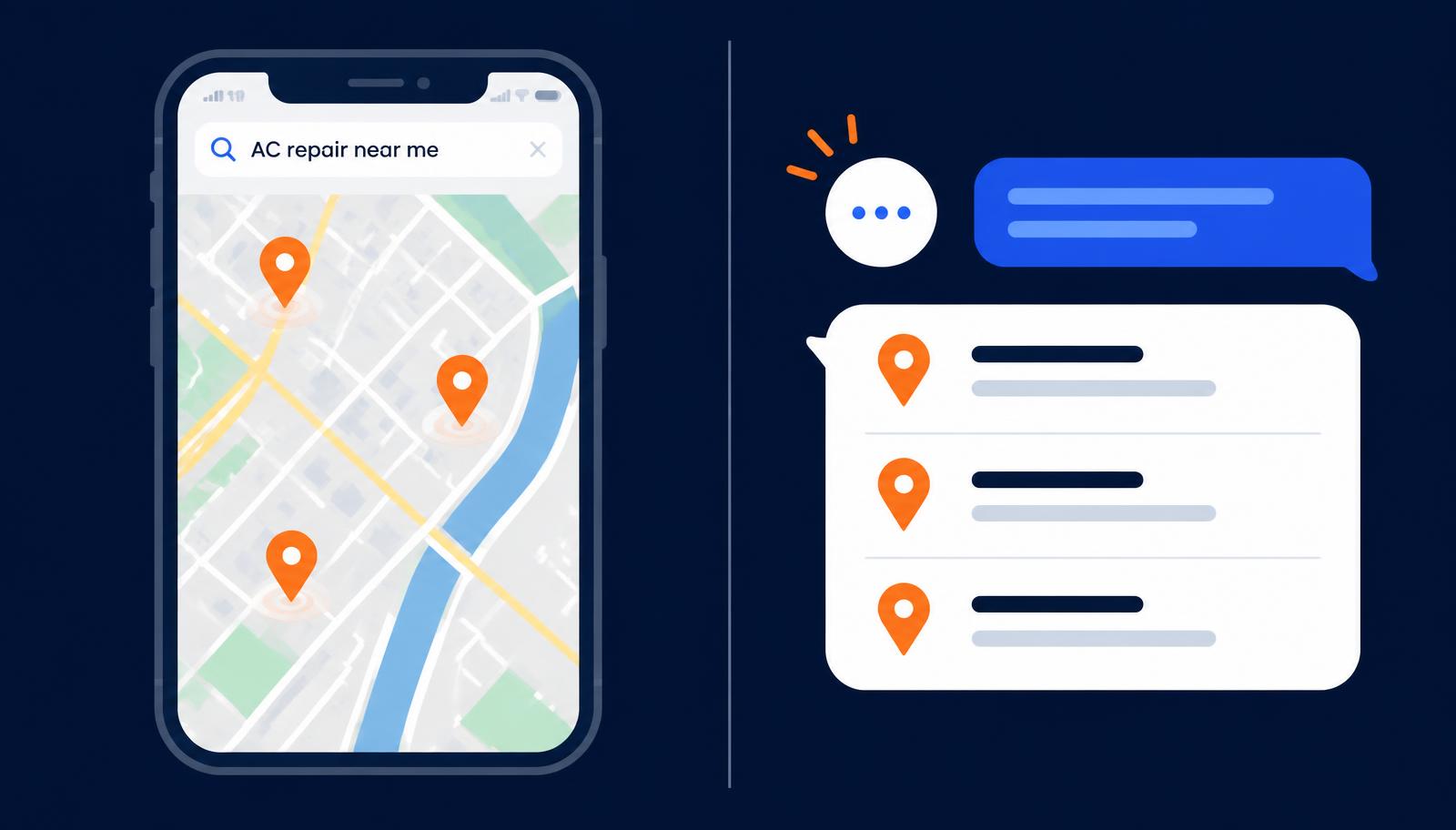
You checked this morning. Your shop sits in the Map Pack for "AC repair near me." The pin is right, the reviews are strong, the phone should be ringing.
Then a homeowner opens ChatGPT, types "who should I call for AC repair in my area," and gets three names. None of them are yours.
That is not a ranking problem. It is a second shelf problem — Maps and AI assistants pull from different evidence, so winning one does not hand you the other. Here is what the 2026 data shows, and a 30-day plan a small crew can actually run.
Not sure whether you show up in AI answers at all? Get My Free Visibility Audit.
The false choice: Google or ChatGPT
Answer first: It is not either/or. Homeowners use several places in one decision, so you need to be findable in all of them.
BrightLocal's July 2026 consumer research found 75% of consumers used more than one channel while searching for a local business. Roughly 23% started on an AI tool, and about 18% used AI at some point in the journey — but the majority still verified on Google and Maps before picking up the phone.
So the honest framing is layered, not competitive. If you want the plain-English breakdown of those layers, read SEO vs AEO vs GEO for Local Businesses (What Actually Matters in 2026).
What BrightLocal found (Maps mentions vs AI surfaces — plain English)
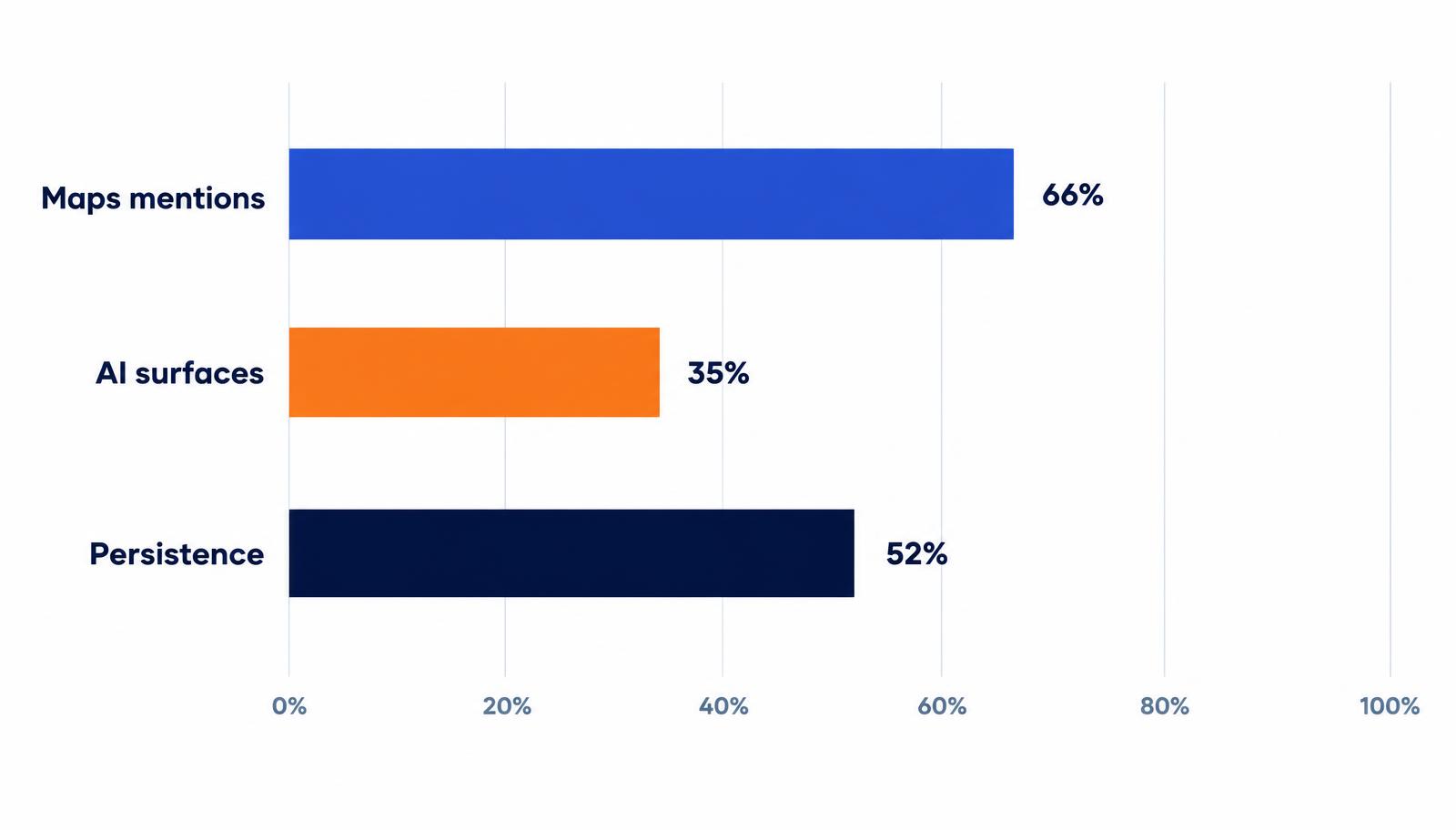
Answer first: Maps mentions tracked businesses far more often than AI surfaces do — so most shops are visible in one place and invisible in the other.
- Maps mentioned tracked businesses about 66% of the time for relevant local prompts.
- AI surfaces landed around 32–38% — roughly half the exposure.
- Persistence sat around 50%+ for businesses that already appeared, meaning a name that shows up once often shows up again — but not always.
Consumer appetite is running ahead of that gap. BrightLocal's Local Consumer Review Survey 2026 reported roughly 45% interest in using AI to find local businesses, while only about 6% were doing it regularly. The lane is still open.
Why platforms disagree (low overlap, and why one “#1” doesn’t travel)
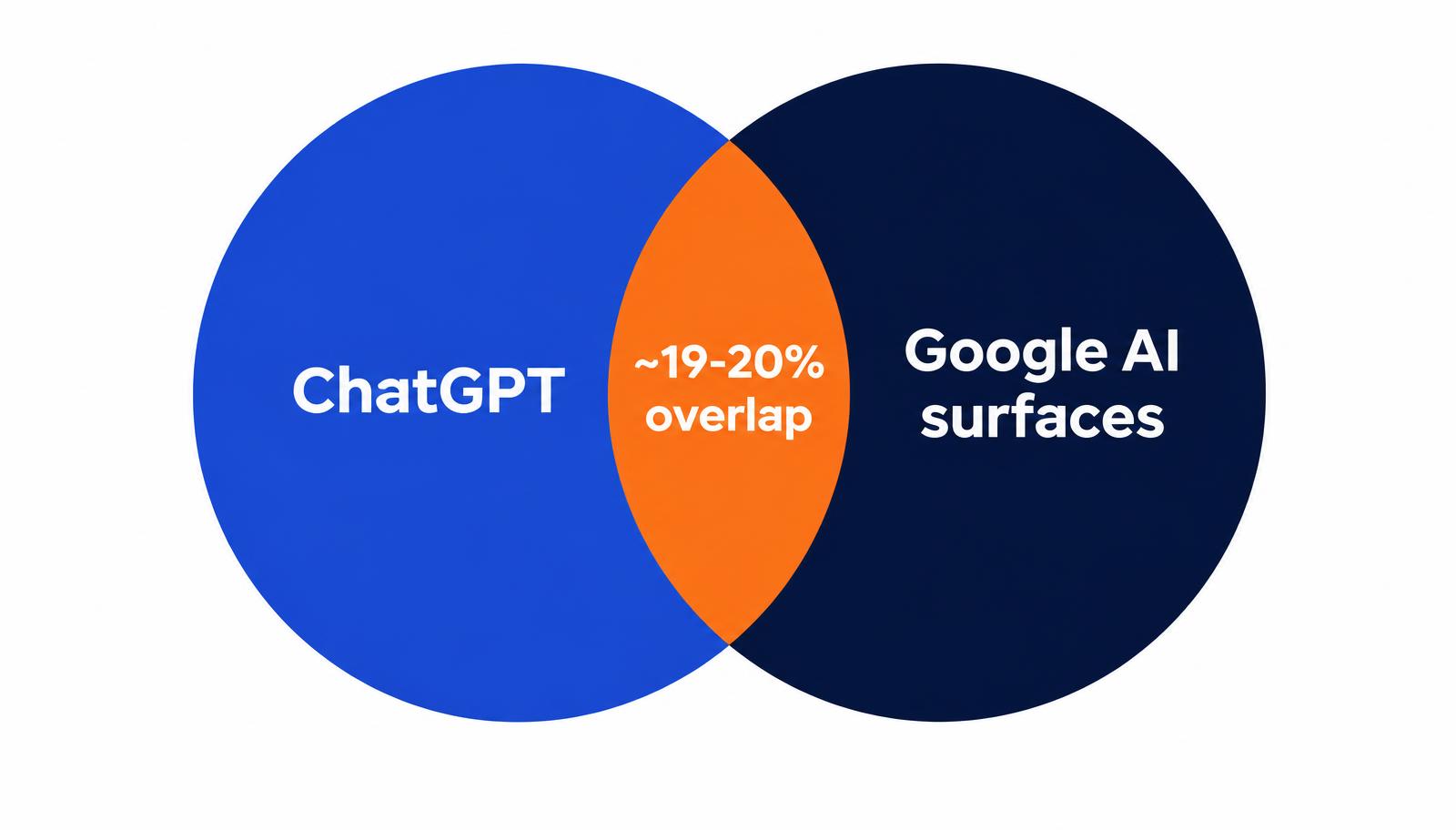
Answer first: Each platform builds its own shortlist, so a win on one rarely copies over.
BrightLocal measured only about 19–20% overlap between ChatGPT's recommendations and Google's AI surfaces, and roughly 29% between AI Mode and AI Overviews. Different sources, different weighting, different answer.
Practically: there is no single "#1" anymore. There is a shortlist per platform, and your job is to be credible enough that each one keeps reaching for your name.
What AI actually cites (GBP vs your website vs directories)
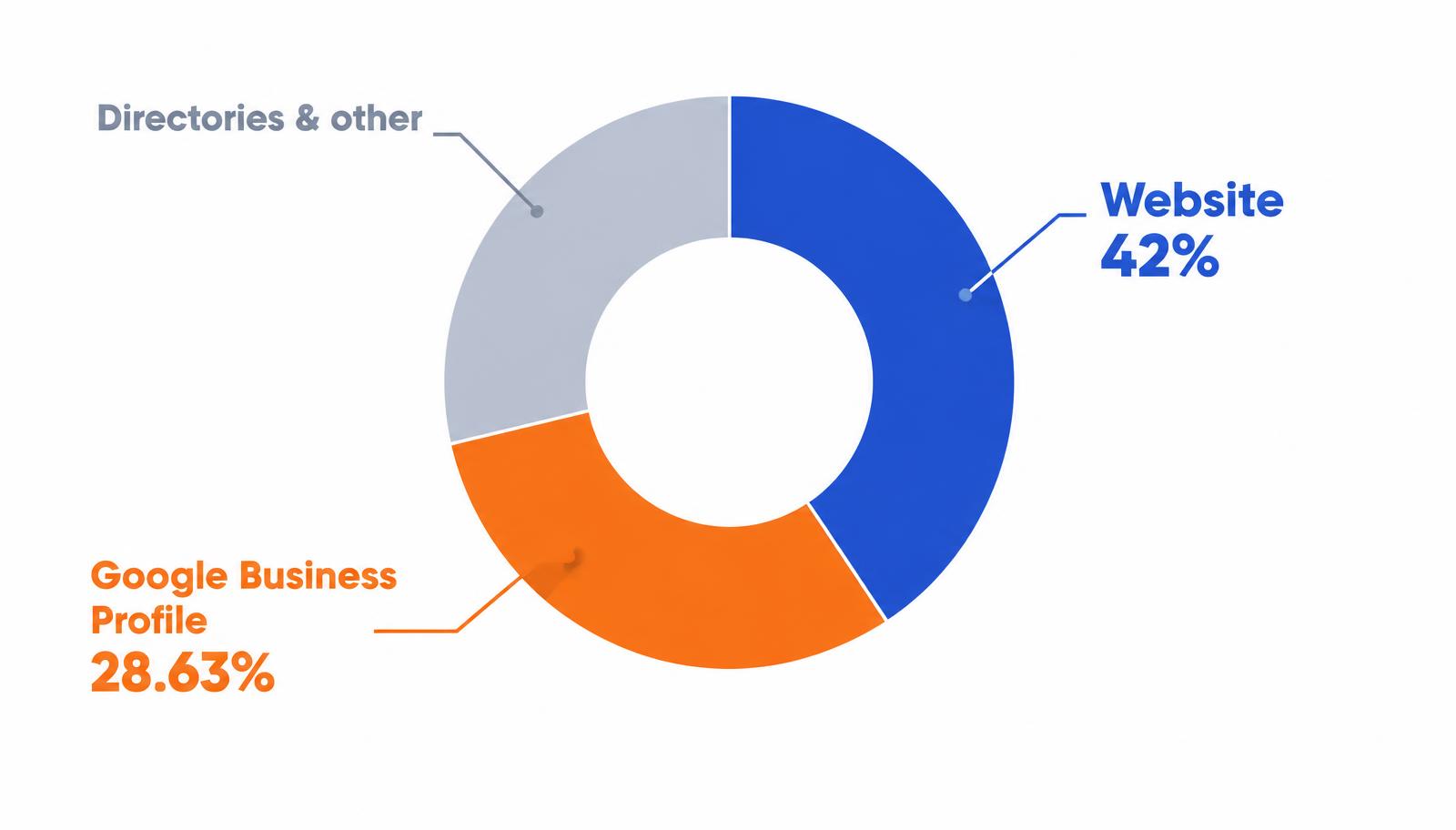
Answer first: Your own website carries the most citation weight, with your Google Business Profile close behind — then directories and "best of" lists.
- Business websites: roughly 42% of citations in BrightLocal's analysis.
- Google Business Profile: 28.63% — still a heavyweight.
- The rest spread across directories, review platforms, and local "best of" roundups.
Whitespark's 2026 signal research points the same direction: consistent business data, real reviews, and clear service and city pages are what these systems can actually quote. Thin sites give AI nothing clean to cite.
If your listing is the weak link, start with Google Business Profile Audit: 12 Silent Leaks Costing You Calls.
A 30-day close-the-gap plan for a small crew
Days 1–10: make your business legible
- Write one clear sentence per service: what it is, who it is for, which cities.
- Match your name, address, phone, and hours everywhere they appear.
- Add plain-language answers to the five questions customers ask on every call.
- If you want the deeper version of this work, see generative engine optimization.
Days 11–20: build citable proof
- Ask for reviews that mention the job and the city, not just "great service."
- Reply to every review — answered reviews read as an active business.
- Publish one page per core service and one per primary city you truly serve.
- Get listed where your trade is genuinely covered locally, not everywhere.
Days 21–30: check, then repeat
- Prompt ChatGPT, Google AI Mode, and Maps the way a homeowner would. Record whether your name appears, and how you are described.
- Repeat the same prompts weekly — one result is noise, four is a pattern.
- Fix whatever the answers get wrong about you, then keep the cadence going with local SEO and Google Business Profile optimization.
What not to do
- Don't abandon Maps for AI. Google still starts and verifies most local jobs.
- Don't judge your visibility on a single prompt in a single tool.
- Don't buy "AI ranking" guarantees — no one controls a model's output.
- Don't spin up thin city pages with swapped place names.
- Don't let your reviews go quiet while you chase new channels.
Common Questions From Local Business Owners
Because Maps ranking and AI recommendation use different evidence stacks. BrightLocal found Maps mentioned tracked businesses ~66% of the time vs ~32–38% for AI surfaces — and ChatGPT only overlapped ~19–20% with Google’s AI surfaces.